
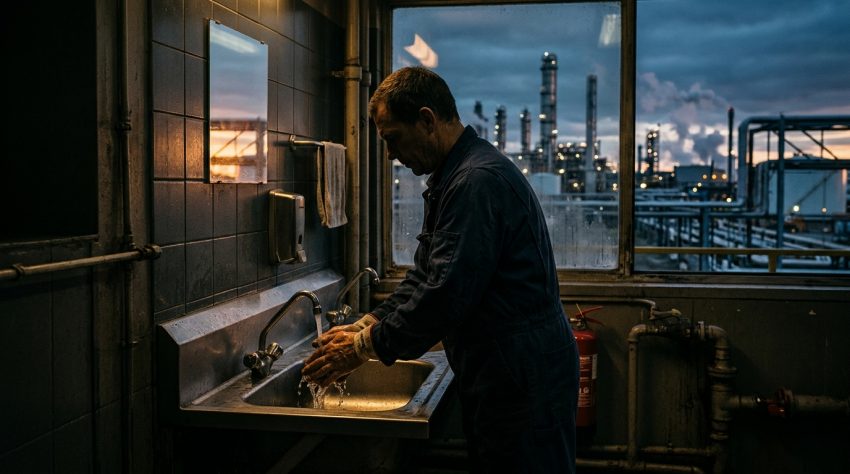
The Washroom as Customer Loyalty Battleground
India’s major petroleum retailers are quietly waging a competition that extends far beyond fuel pricing and octane ratings. During 2026, oil and gas companies have begun systematizing one of the most overlooked touchpoints in the fuel retail journey: the petrol pump washroom. What was once a grudging facility—often dingy, poorly maintained, and rarely audited—has evolved into a measurable component of brand differentiation, complete with hygiene protocols, real-time feedback mechanisms via QR codes, and performance metrics that directly influence station operator ratings and incentives.
This shift reflects a deeper recognition within India’s petroleum distribution network that customer trust extends across the entire transaction experience. As fuel commoditizes and price competition intensifies, particularly amid volatile crude oil markets and rupee fluctuations, oil majors are identifying adjacent loyalty drivers. The washroom—a space customers enter without choice, at moments of vulnerability—has emerged as an unexpectedly powerful validator of corporate commitment to quality and consumer dignity.
Why Washroom Standards Matter for Oil Company Branding
For decades, petrol pump hygiene in India remained a blind spot. Station operators, earning margins of approximately ₹2-3 per litre in a highly competitive retail environment, often viewed washroom maintenance as a cost burden rather than a brand asset. Facilities ranged from barely functional to genuinely hazardous, particularly at highway locations where traffic volumes are high but oversight historically minimal.
The strategic pivot by companies like Indian Oil Corporation Limited (IOCL), Hindustan Petroleum Corporation Limited (HPCL), and Bharat Petroleum Corporation Limited (BPCL) reflects market maturity. With approximately 180,000 petrol pumps operational across India as of 2026, and consumer expectations shaped by modern retail experiences in quick-commerce and organized QSR sectors, fuel retailers recognize that a single dirty washroom creates disproportionate reputational damage—amplified instantly through social media and review platforms.
Additionally, as electric vehicle adoption accelerates, the window for petroleum retailers to maximize customer loyalty through traditional fuel sales narrows. Investment in peripheral amenities—clean facilities, convenience services, digital engagement—becomes critical infrastructure for retaining relevance as a community touchpoint, even as the core business gradually declines.
QR-Code Feedback Systems and Real-Time Accountability
The deployment of QR code-based feedback systems at petrol pump washrooms represents a digitalization strategy with immediate accountability implications. When a customer scans a code to rate washroom cleanliness, facility availability, or amenity quality, the data flows directly to corporate dashboards and regional management systems. This real-time feedback loop eliminates the traditional lag between a poor experience and corrective action.
In practice, this means station operators who neglect maintenance receive immediate alerts and performance demerits. Oil companies can identify patterns—specific times of day when facilities degrade, seasonal maintenance failures, or systemic issues requiring capital investment. Unlike annual audits or mystery-shopper programs, which are expensive and infrequent, continuous feedback allows dynamic resource allocation.
The psychological effect on station staff is significant as well. When employees understand that facility quality is monitored and feeds into performance incentives, behavioral change follows. A petrol pump attendant who knows that washroom cleanliness affects their employer’s corporate scorecard will prioritize it differently than one working under vague corporate policies.
Competitive Differentiation in a Commoditized Market
India’s fuel retail landscape operates with razor-thin operating margins and minimal product differentiation. Fuel grade, regulatory compliance, and price are largely standardized across majors. This compression forces differentiation into the realm of customer experience. BPCL’s “Rewards” loyalty program, HPCL’s digital payment integration, and IOCL’s expansion of convenience retail offerings represent efforts to build stickiness beyond the transaction itself.
Clean, well-maintained washrooms—increasingly rare in Indian petrol pumps—become a visceral marker of corporate reliability and consumer respect. A customer who experiences a consistently hygienic facility may unconsciously associate that station with trustworthiness, even when purchasing identical products at identical prices. Over time, this perception translates into brand preference and repeat business.
For independent and smaller-chain petrol pump operators, however, this trend creates tension. Implementing robust hygiene standards and digital feedback infrastructure requires capital expenditure that independent stations may struggle to justify given uncertain ROI. This dynamic could inadvertently accelerate consolidation, favoring large corporate networks over independent operators—a shift with implications for rural fuel retail accessibility and employment.
Implementation Challenges and Regional Variations
Rolling out washroom standardization across India’s geographically and economically diverse petrol pump network presents logistical challenges. Urban stations in metros like Delhi, Mumbai, and Bangalore face different demand patterns and customer expectations than highway locations in Uttar Pradesh or rural stations in Rajasthan. Water scarcity in drought-prone regions complicates maintenance. Power reliability affects automated cleaning systems.
Oil companies are calibrating standards accordingly. Urban premium stations may feature touchless fixtures, temperature-controlled facilities, and amenity kits. Rural and semi-urban stations prioritize reliable water access, waste management, and basic cleanliness. This tiered approach acknowledges resource constraints while maintaining minimum quality thresholds.
Training represents another barrier. Station staff in smaller towns may lack formal facility management training. Corporate-led training programs, often delivered via video or periodic visits, struggle to ensure consistent application. Language, literacy, and infrastructure access all influence implementation success rates.
Broader Implications for Indian Petroleum Retail
The washroom standardization movement signals a maturation phase for India’s oil retail sector. It reflects recognition that competitive advantage now extends into operational granularity—the details that daily customers encounter but corporate leadership rarely sees. This mirrors similar evolutions in Indian retail more broadly, where organized players compete on experience as much as price.
For fuel consumers, particularly women and long-distance travelers, improved petrol pump hygiene carries dignity implications. Women’s reluctance to use public facilities due to cleanliness concerns has been well-documented in sanitation research; extending this principle to fuel stations acknowledges that access quality matters as much as physical access.
The QR code feedback systems also represent a subtle shift toward consumer voice in corporate governance. Frontline feedback directly informs resource allocation and performance metrics, potentially reducing the gap between customer needs and corporate decisions. As digital adoption expands in India, this feedback loop becomes increasingly powerful.
For petroleum companies’ longer-term strategy, washroom investment may function as a “holding action” in the transition to energy transition. As electrification advances and fuel volumes decline, maintaining customer relationships and brand affinity through experience quality ensures companies retain relevance as energy providers more broadly—whether through charging networks, renewable energy retailing, or mobility services.
Conclusion
The transformation of petrol pump washrooms from neglected facilities into monitored, quality-controlled touchpoints reflects India’s petroleum retail sector’s evolution toward experience-driven differentiation. Through systematic hygiene standards, QR-code feedback systems, and performance-linked accountability, oil majors are recognizing that customer trust is built across the entire transaction ecosystem, not just at the pump. For an industry navigating commoditization, margin compression, and long-term energy transition, investing in seemingly minor amenities represents strategic thinking—building loyalty and corporate reputation in ways that contemporary fuel consumers increasingly value. As margins tighten and alternatives multiply, the cleanliness and quality of a petrol pump’s washroom may prove more decisive in customer retention than the fuel grade itself.
By FuelWings Energy Desk · Reviewed by FuelWings Editorial Team · Published 26 October 2026 IST. FuelWings covers India & global oil, gas and fuel-price news; figures are verified against the original report and public data.
Topics: fuel retail experience India, oil company customer engagement, petrol station hygiene standards, QR code feedback system, retail differentiation petroleum, IOCL Hindustan Petroleum BPCL, fuel station amenities India.
Source: ET EnergyWorld (Oil & Gas) ↗