
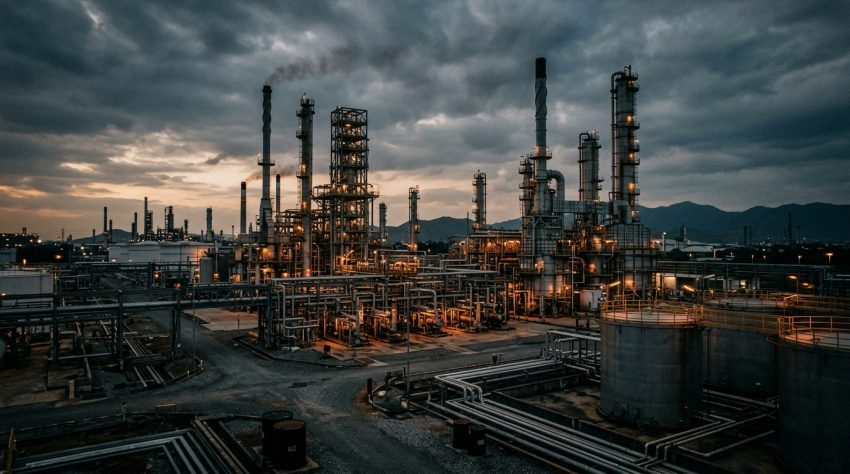
BPCL Q2 Earnings: Disconnect Between Top-Line Growth and Bottom-Line Contraction
Bharat Petroleum Corporation Limited (BPCL), India’s second-largest state-owned oil refiner, reported second-quarter results for FY2026–27 that expose a critical vulnerability in downstream energy business models: the inability to translate volume growth into proportional profit expansion. The company’s consolidated net profit declined 21% year-over-year to ₹4,863 crore, even as revenue surged 29% during the same period—a divergence that underscores margin compression and operational headwinds peculiar to India’s petroleum sector.
This earnings release arrives at a pivotal moment for India’s oil and gas industry. Global crude prices remain volatile, domestic demand for refined products continues to rise amid economic growth, and refiners face mounting pressure to balance cost control with energy security obligations. BPCL’s Q2 performance offers a window into how India’s integrated state refiners are navigating these competing forces.
Revenue Growth Masked by Margin Squeeze in Refining Operations
A 29% increase in revenue—likely driven by elevated crude oil prices transmitted to refined product sales during Q2 and higher sales volumes—typically signals robust market demand. For BPCL, which operates refineries in Kochi, Mumbai, and Numaligarh (Assam), this revenue expansion reflects the company’s core refining and marketing operations serving the Indian market and export destinations.
However, the 21% profit decline reveals that cost of goods sold, operating expenses, or both outpaced the top-line gains. In the downstream petroleum sector, this scenario most commonly reflects:
- Crude feedstock costs rising faster than product realization: Even though global crude prices may have stabilized quarter-on-quarter, refiners procure feedstock at spot or contracted rates that lag product sales pricing by weeks. A volatile crude market can trap refiners in adverse cost positions.
- Refining margin compression: The crack spread (the difference between crude cost and the value of refined products like petrol, diesel, and fuel oil) tightens when product demand softens or supply gluts appear in regional markets. Q2 typically sees seasonal demand patterns that may have weakened margins.
- Energy and operating cost inflation: Indian refineries face rising costs for utilities (power, steam, water), labor, and maintenance. Regulatory compliance expenses—including environmental remediation and emissions management—add to the burden.
- Working capital and finance charges: Higher interest rates in India’s banking system during 2026 have increased the cost of short-term financing for inventory and receivables, directly hitting profitability.
Structural Headwinds in India’s Refining Sector
BPCL’s earnings challenge is not isolated. Across India’s refining industry—which includes majors like Indian Oil Corporation (IOCL) and Reliance Industries, plus smaller players—profitability has become increasingly dependent on operational efficiency, crude procurement timing, and export market access rather than domestic demand alone.
Several structural factors constrain margins:
- Fuel price regulation: The Indian government’s periodic intervention in petrol and diesel pricing to manage inflation means refiners cannot always pass through full cost increases to consumers. This policy dampens retail margins and limits pricing flexibility.
- Refinery overcapacity in Asia: Global refining capacity, particularly in Southeast Asia and India, has expanded faster than demand growth. This regional oversupply keeps product prices depressed, eroding crack spreads for all refiners operating in Asian markets.
- Energy transition headwinds: As India accelerates adoption of electric vehicles and renewable energy, long-term demand for conventional refined fuels faces structural uncertainty. Refiners are investing in renewable feedstocks and bio-fuels, which require capital expenditure that weighs on near-term profitability.
- Crude import dependence: India imports ~85% of its crude oil, making it vulnerable to global price shocks. Unlike oil-producing nations, Indian refiners have limited leverage to hedge upstream supply disruptions.
BPCL’s Operational and Strategic Response
BPCL’s management has historically responded to margin pressures through capacity optimization and cost discipline. The company’s refinery fleet—with a combined processing capacity of approximately 38 million tonnes per annum (MMTPA)—operates at high utilization rates to spread fixed costs across larger volumes. During Q2, the company likely maintained this focus on throughput maximization, which explains the revenue growth despite flat or declining unit margins.
However, Q2’s results suggest that scale alone is insufficient to offset cost inflation. Looking ahead, BPCL’s strategic initiatives to shore up profitability include:
- Renewable integration: BPCL’s investments in bio-refining capacity and hydrogen production are early-stage but critical for future margin sustainability as India transitions its energy mix.
- Export market participation: By selling refined products to higher-margin export markets (Middle East, Africa), BPCL can dilute the impact of domestic price controls.
- Petrochemical and specialty product growth: Expanding production of high-value petrochemicals and specialty fuels (marine gasoil, aviation fuel) offers better margins than commodity refined fuels.
- Operational excellence: Energy audits, process optimization, and workforce productivity initiatives are continuous but yield marginal gains in a competitive environment.
Implications for India’s Energy Security and Investor Sentiment
BPCL’s Q2 earnings carry implications beyond the company’s balance sheet. As a state-owned enterprise critical to India’s energy security, BPCL’s refining and distribution network serves as the backbone of fuel supply across the nation. Profit pressure, if prolonged, could constrain the company’s ability to invest in capacity expansion, environmental upgrades, and technology modernization—all critical to supporting India’s projected 5–7% annual energy demand growth.
For investors and stakeholders, the earnings report highlights the structural challenge facing downstream oil companies in a transitional energy market. High revenue growth masking profit decline is not a sign of operational success but rather a red flag that cost pressures are outpacing pricing power. This dynamic is likely to persist as long as crude price volatility, regional oversupply, and domestic fuel price controls remain in play.
Global energy majors like ExxonMobil and Shell, which operate in less price-regulated markets, enjoy greater margin flexibility. By contrast, BPCL and peer state refiners operate within tighter constraints, making them more vulnerable to external shocks and less attractive to equity investors seeking consistent profit growth.
Conclusion: Margin Compression as India’s Refining Reality
BPCL’s Q2 FY27 results—a 21% profit decline on 29% revenue growth—exemplify the structural profitability challenge facing India’s downstream petroleum sector. While the company’s operational scale and market position remain strong, the divergence between volume growth and profit contraction signals that incremental refining capacity and sales volume no longer guarantee earnings expansion in a commodity-dependent, price-regulated, oversupplied market.
For BPCL to restore profit growth, management must accelerate the shift toward higher-margin specialty fuels, renewable integration, and export-oriented strategies while simultaneously maintaining operational discipline on costs. Absent structural reform in fuel price regulation or a sustained tightening of global refining capacity, Indian refiners will likely continue to face margin pressure, making profitability growth elusive despite robust domestic fuel demand.
By FuelWings Energy Desk · Reviewed by FuelWings Editorial Team · Published 24 October 2026 IST. FuelWings covers India & global oil, gas and fuel-price news; figures are verified against the original report and public data.
Topics: BPCL second quarter earnings, Indian oil refinery margins, downstream energy profitability, crude oil price impact, petroleum company results India.
Source: ET EnergyWorld (Oil & Gas) ↗