
U.S. Strategic Petroleum Reserve drops to 298.7M barrels amid the Strait of Hormuz standoff, triggering a massive intraday rally in global crude futures.
NEW YORK — International energy markets experienced a sharp reversal as crude oil futures surged over 4% intraday, driven by data confirming that the U.S. Strategic Petroleum Reserve (SPR) has fallen below a critical historic floor. The benchmark West Texas Intermediate (WTI) rallied back toward $81 per barrel, abruptly erasing a cumulative 10% decline recorded over the previous two weeks and underscoring deepening anxieties over eroding Western energy cushions.
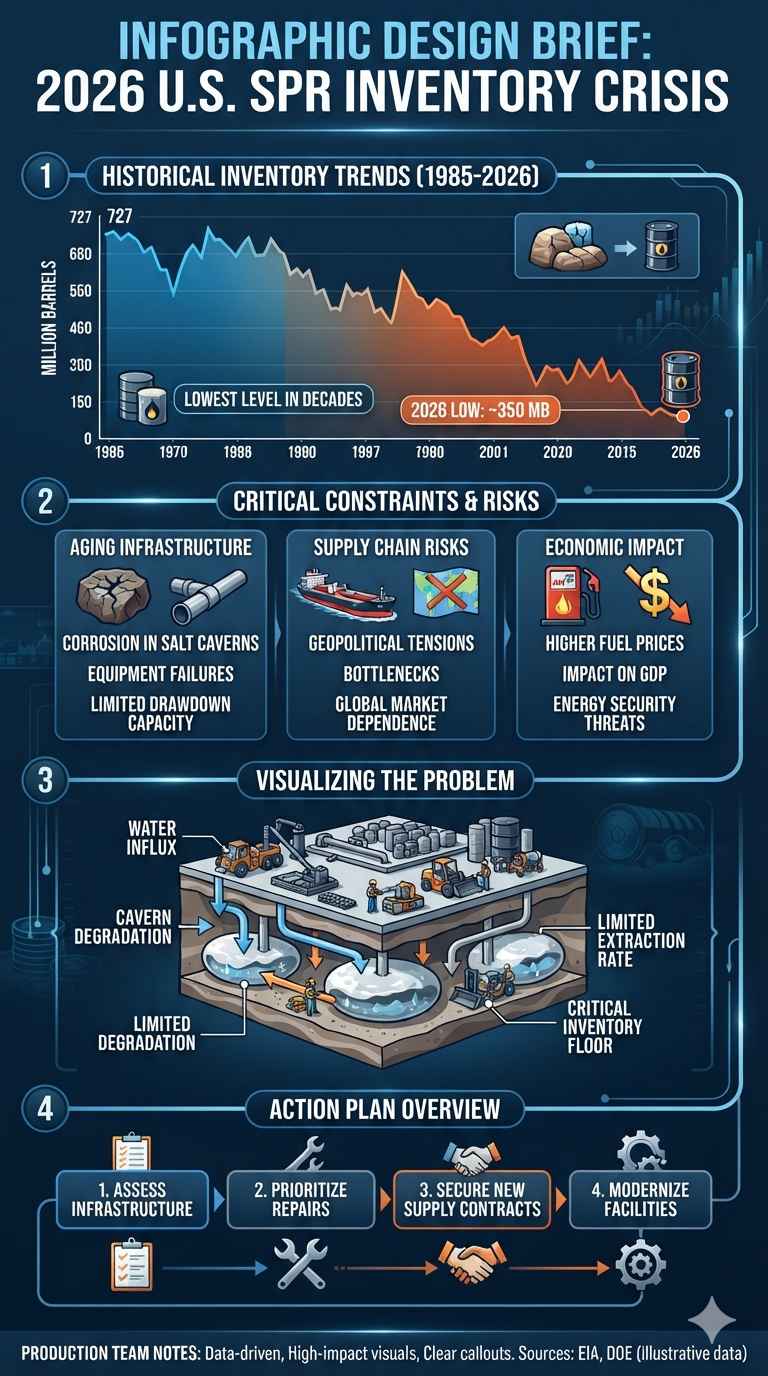
The catalyst for the rally was the latest inventory report from the U.S. Department of Energy (DOE). The data revealed a sharp 6.1-million-barrel weekly draw from national stockpiles. This liquidation pushes total U.S. emergency reserves down to 298.7 million barrels—breaching the 300-million-barrel threshold and marking the lowest volume held in the nation’s salt caverns since January 1983.
U.S. Strategic Petroleum Reserve Inventory (Barrels)
600M ───┐
        │ (Early 2022: ~600M)
        ▼
400M ───────┐
            │ (March 2026: ~415M)
            ▼
200M ─────────── [Current: 298.7M] ◄── Lowest since Jan 1983
Infrastructure at the Brink
The historic depletion of the SPR is the direct result of aggressive emergency drawdowns mandated to shield the domestic economy from international shipping bottlenecks and escalating regional conflicts. The Trump administration authorized a sweeping 172-million-barrel emergency release in March 2026 to combat extreme price volatility. However, energy analysts warn that the government is running out of operational headroom.
While an Energy Department spokesperson noted that the minimum amount of oil needed to physically run the reserve is approximately 70 million barrels, a recent evaluation by the U.S. Government Accountability Office (GAO) highlighted steep structural concerns. The GAO found that the SPR could draw down oil at only about 61% of its originally intended rate. Furthermore, its capacity to accept returning crude has fallen to 56% of design specifications. Lawmakers have cautioned that drawing inventories down further risks causing permanent damage to the underground salt caverns, limiting future emergency capabilities.
Strait of Hormuz Standoff Stokes Risk Premiums
The drain on strategic reserves coincides with a total standstill in international diplomacy, further exacerbating global market anxiety.
- The Impasse: Geopolitical tensions over the Strait of Hormuz crisis are escalating. The critical transit route remains heavily disrupted since Iran announced its closure to hostile nations in March.
- Tough Demands: Tehran’s Supreme National Security Council recently formalised tough terms for reopening the shipping channel. Demands delivered to Washington include a permanent end to regional military confrontations, the lifting of the U.S. naval blockade, payment for war damages, and the unconditional release of frozen Iranian assets.
- Commercial Inventory Squeeze: With Middle Eastern transit routes heavily compromised, international buyers have aggressively pivoted to U.S. crude exports. High domestic refinery utilization and record export volumes have consequently dragged U.S. commercial stockpiles down. According to the U.S. Energy Information Administration (EIA), commercial crude inventories sit roughly 6% below the five-year average.
The Long-Term Floor
The current supply squeeze presents a dual structural challenge for global energy markets. In the immediate term, price volatility will remain tightly tethered to any sudden breakthroughs or breakdowns in regional security talks.
Looking further ahead, the structural design of the current relief program will shape market dynamics. Rather than outright sales, much of the current SPR drawdown relies on an exchange lending mechanism where companies must return the borrowed crude plus a premium as high as 28%. The looming requirement for commercial entities to buy back and return hundreds of millions of barrels ensures an aggressive, multi-year price floor—one that will likely keep global crude valuations elevated and fuel macro inflation pressures for the foreseeable future.