
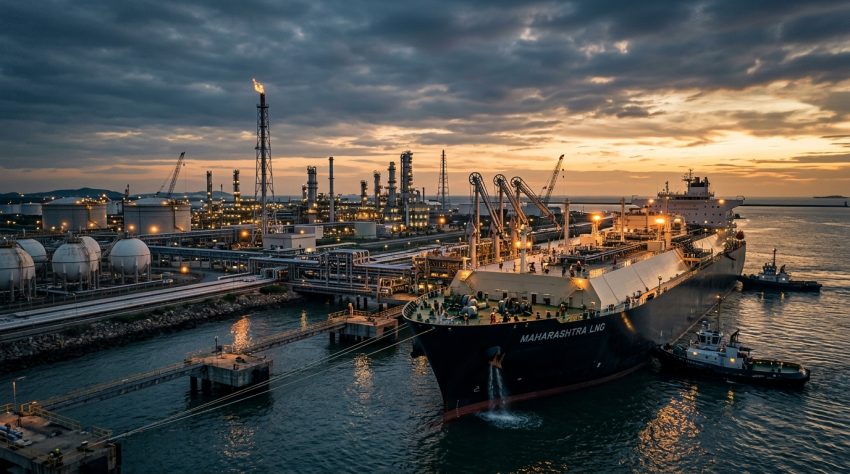
India’s LNG Import Momentum Accelerates Amid Geopolitical Supply Shifts
India’s liquefied natural gas (LNG) import volumes have registered a robust 9% year-on-year growth during the first half of the fiscal year (March–September 2026), signalling a sharp rebound in the nation’s gas consumption and a strategic recalibration of supplier dependencies. This expansion arrives at a critical juncture for India’s energy transition, as the country grapples with rising electricity demand, industrial feedstock requirements, and the imperative to bridge renewable capacity gaps with cleaner fossil fuels.
The uptick in LNG acquisitions reflects not merely a mechanical increase in import volumes, but a deliberate portfolio rebalancing among major source nations. The United States, Oman, and Nigeria have emerged as the primary beneficiaries of India’s expanded buying appetite, collectively filling supply gaps left by traditional vendors and demonstrating the effectiveness of New Delhi’s multi-vendor procurement doctrine in an increasingly fragmented global energy market.
Who Supplies India’s Growing Gas Appetite?
India’s energy import strategy has historically concentrated on Qatar, Australia, and Malaysia—long-standing partners whose contractual stability and proximity logistics have underpinned the nation’s gas security architecture. However, the 9% import growth documented between March and September 2026 showcases a deliberate geographical diversification.
United States LNG exports to India have gained material traction, driven by expanded production capacity at facilities such as Sabine Pass and ongoing ramping at newer Gulf Coast terminals. American shale gas producers, benefiting from low domestic feedstock costs and competitive pricing mechanisms, have positioned themselves as viable alternatives to traditional suppliers. For India—where downstream gas consumers and power generators remain price-sensitive—the availability of US LNG linked to Henry Hub benchmarks rather than Brent crude or oil-linked formulas provides valuable hedging optionality.
Oman’s contribution to India’s LNG portfolio has intensified following the sultanate’s expanded production investments. Oman LNG, the nation’s flagship export company, has ramped production at its existing trains while evaluating potential capacity enhancements. Geographic proximity—a critical factor in shipping economics and delivery timelines—renders Omani gas particularly attractive for Indian importers managing just-in-time inventory cycles and volatile summer demand spikes.
Nigeria, long plagued by domestic insecurity, pipeline vandalism, and chronic underinvestment, has paradoxically captured growing export market share. This reflects both recovery in operational discipline at major export terminals and India’s conscious strategy to build relationships with Africa-based suppliers as part of its broader South-South energy partnership framework. Nigerian liquefaction capacity, operated through entities like Nigeria LNG (NLNG), has moved past historical production bottlenecks, enabling more predictable shipment schedules to Asian buyers.
India’s LNG Import Patterns: Fiscal Year Dynamics and Seasonal Demand
The 9% growth figure, while encouraging, must be contextualised within India’s cyclical energy demand architecture. The March–September window captures the latter part of the Indian fiscal year (ending 31 March) overlapping with the onset of summer cooling demand and early monsoon transition patterns. This six-month window traditionally exhibits volatile LNG offtake, as:
- Power generation demand accelerates ahead of peak summer months (May–June), driving utility gas procurement.
- Industrial feedstock requirements (fertiliser, petrochemicals, steel) remain relatively stable, creating a baseline consumption floor.
- Spot market liquidity surges as utilities hedge inventory ahead of season-specific price volatility.
India’s LNG imports during this half-year period in 2026 have likely benefited from a combination of factors: elevated domestic demand (underpinned by a growing economy, albeit moderating from historical 6%+ GDP expansion), competitive international LNG pricing, and strategic restocking by state-run importers such as GAIL India and Petronet LNG.
Strategic Implications for India’s Energy Security Architecture
The diversification among US, Oman, and Nigerian suppliers carries profound ramifications for India’s medium-term energy policy. While Australia and Qatar remain foundational partners—Australia via long-term contracts with entities like Santos and Woodside Petroleum, Qatar through state-backed Doha Gas and historic LNG supply agreements—the rise of alternative suppliers signals several strategic pivots:
First, contractual flexibility: Traditional suppliers have locked India into rigid long-term contracts (often 20-year terms with take-or-pay obligations). Newer entrants, particularly US producers and emerging African suppliers, offer greater spot-market participation and shorter-tenure arrangements, allowing Indian importers to respond dynamically to demand fluctuations and seasonal volatility.
Second, geopolitical risk mitigation: Concentrating LNG sourcing among a narrower set of suppliers exposes India to supply disruption risks rooted in regional instability. The inclusion of US, Oman, and Nigerian sources distributes this risk across three distinct geopolitical zones and regulatory regimes, reducing single-point-of-failure exposure. This principle has guided New Delhi’s energy diplomacy for decades but assumes renewed urgency as global energy markets become more contested.
Third, pricing leverage: A expanded supplier base creates competitive pressure that benefits Indian importers. When LNG markets tighten (as during the 2021–2022 energy crisis), access to diverse sources provides alternative negotiations pathways and prevents monopolistic behaviour by traditional suppliers.
Market Headwinds and Structural Challenges Ahead
Despite the encouraging 9% growth, India faces material structural headwinds in sustaining LNG import momentum. Global LNG supply growth has moderated as major projects (including Mozambique LNG delays and Russia’s Arctic ventures facing Western sanctions) have encountered delays or cancellations. Simultaneously, European and Asian importers—particularly China and Japan—remain price-insensitive and willing to absorb elevated LNG costs, creating bidding pressure that potentially crowds out price-conscious Indian buyers.
Domestically, India’s gas production from conventional fields (operated by ONGC and Oil India Limited) has stagnated, while deepwater and ultra-deepwater exploration has yielded inconsistent results. Production from the KG-D6 block, historically a significant contributor, has faced subsidence-related challenges and equipment limitations. Consequently, India remains structurally dependent on imports to meet growing gas demand—a dependency that the current 9% import surge underscores.
Furthermore, India’s LNG regasification infrastructure, while expanded through terminals operated by Petronet LNG (Dahej and Kochi) and GAIL India (Mundra), faces capacity constraints during peak demand windows. Debottlenecking initiatives and proposed new terminals (such as those planned by Adani Energy Solutions) remain under development, potentially constraining import optionality until mid-to-late 2027.
Conclusion: Navigating Energy Transition Through Diversified Supply Chains
India’s 9% LNG import growth during March–September 2026, underpinned by expanded sourcing from the United States, Oman, and Nigeria, exemplifies a maturing energy import strategy that balances cost discipline, supply security, and geopolitical pragmatism. The shift towards multi-vendor sourcing—beyond historical reliance on Qatar and Australia—reflects recognition that global energy markets are fragmenting and that resilience demands optionality.
However, this growth trajectory remains contingent on several downstream variables: sustained global LNG supply expansion, sustained demand growth in India’s power and industrial sectors, and continued investment in regasification and downstream distribution infrastructure. As India pursues aggressive renewable energy deployment targets (aiming for 500 GW by 2030), natural gas will occupy an increasingly critical but transitional role—serving as a “bridge fuel” that enables the baseload reliability necessary during renewable ramp-up phases while maintaining the industrial competitiveness essential for manufacturing-led growth.
For policymakers, energy companies, and investors tracking India’s energy trajectory, the current import expansion signals not a permanent elevation in gas dependency, but rather a strategic window during which diversified, competitive sourcing provides economic and security benefits. Maximising this window through infrastructure investment and procurement discipline will be essential as India navigates the complexities of energy transition in a multipolar world.
By FuelWings Energy Desk · Reviewed by FuelWings Editorial Team · Published 23 October 2026 IST. FuelWings covers India & global oil, gas and fuel-price news; figures are verified against the original report and public data.
Topics: LNG imports India, US liquefied natural gas, Oman LNG exports, Nigeria gas supplies, India energy security, natural gas demand India, gas import diversification.
Source: ET EnergyWorld (Oil & Gas) ↗