
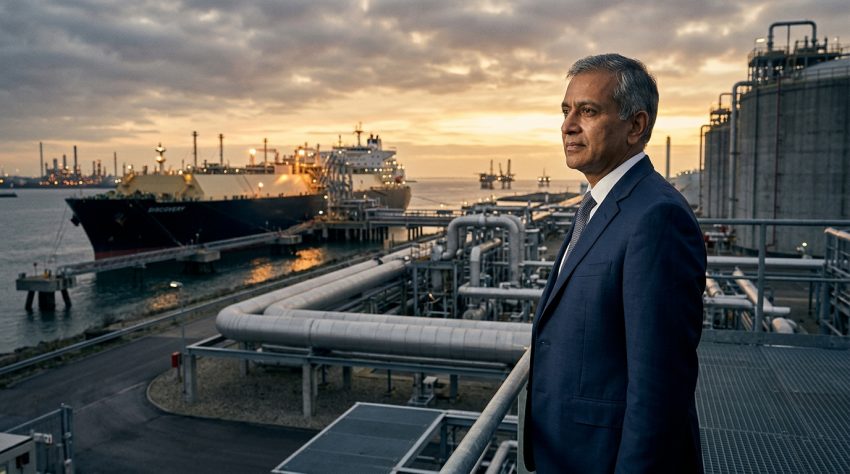
A New Chapter at the Helm of India’s Largest LNG Importer
Petronet LNG Limited, the country’s dominant liquefied natural gas (LNG) import and regasification company, has appointed Sanjay Kumar — a seasoned professional from GAIL (India) Limited — as its new Managing Director and Chief Executive Officer. The transition, effective as of early October 2026, marks a significant moment of leadership renewal at an organisation that sits at the very heart of India’s natural gas supply chain.
Petronet LNG was incorporated in 1998 as a joint venture between four of India’s largest public-sector energy companies: GAIL (India) Ltd, Oil and Natural Gas Corporation (ONGC), Indian Oil Corporation Ltd (IOCL), and Bharat Petroleum Corporation Ltd (BPCL) — each holding a roughly equal equity stake. The company operates the Dahej LNG terminal in Gujarat, which is one of the largest LNG receiving facilities in Asia, along with the Kochi terminal in Kerala. Together, these facilities underpin India’s ambition to raise the share of natural gas in its primary energy mix from approximately 6.5% today to 15% by 2030.
Who Is Sanjay Kumar? A Profile of the Incoming Chief
Sanjay Kumar brings with him deep institutional knowledge of India’s gas transmission and marketing ecosystem, having spent a significant portion of his career at GAIL India — the country’s flagship natural gas utility and pipeline operator. GAIL is not only one of Petronet LNG’s four founding promoters but also its single largest off-taker of regasified LNG (RLNG), making Kumar’s familiarity with that critical commercial relationship a potentially decisive asset for the incoming leadership.
GAIL manages over 14,000 kilometres of natural gas pipelines across India and is deeply intertwined with Petronet LNG’s business model — from long-term LNG supply agreements with global exporters like Qatar’s QatermzanGasICOL and the United States’ Venture Global LNG, to the domestic distribution of RLNG to fertiliser plants, power stations, and city gas distribution (CGD) networks. Kumar’s professional formation within that ecosystem suggests he arrives with a granular understanding of the entire gas value chain, from import jetty to end consumer.
Strategic Priorities the New MD Inherits
Kumar steps into a role freighted with substantial strategic imperatives. Petronet LNG is currently in the middle of a multi-year capacity expansion programme at its Dahej terminal, targeting an increase from the current nameplate capacity of 17.5 million tonnes per annum (MTPA) to approximately 22.5 MTPA. The Kochi terminal, meanwhile, continues to operate well below capacity due to insufficient pipeline connectivity with industrial consumers in the hinterland — a long-standing structural challenge that successive managements have attempted to resolve through regulatory advocacy and infrastructure coordination with GAIL and state governments.
Beyond domestic capacity, Petronet has long aspired to develop an LNG import terminal in Sri Lanka, positioning the company as a regional energy hub rather than a purely domestic utility. Whether Kumar will accelerate, pause, or reframe that international ambition will be closely watched by analysts and regional energy diplomats alike.
Perhaps the most consequential item on Kumar’s immediate agenda, however, is the renegotiation of Petronet’s long-term supply contract with Qatar’s QatarEnergy (formerly RasGas / Qatargas). India currently imports approximately 8.5 MTPA from Qatar under a contract that has historically been the single largest LNG supply agreement in the Asia-Pacific region. The existing deal’s pricing terms, which are indexed to crude oil at a relatively favourable slope, were the subject of intense commercial diplomacy between New Delhi and Doha over the past two years. Finalising or extending those terms will be an early test of the new CEO’s negotiating acumen and his ability to align the interests of Petronet’s four promoter-shareholders.
India’s LNG Sector at an Inflection Point
Kumar’s appointment comes at a time when India’s LNG import landscape is evolving rapidly. The country imported roughly 26 million tonnes of LNG in the financial year 2025-26, making it the fourth-largest LNG buyer globally after China, Japan, and South Korea. However, India’s share of incremental global LNG demand is expected to grow substantially through the rest of the decade, driven by the government’s Pradhan Mantri Urja Ganga pipeline expansion, the rapid proliferation of CGD networks across Tier-2 and Tier-3 cities under the Petroleum and Natural Gas Regulatory Board (PNGRB) framework, and rising feedstock demand from the fertiliser sector.
Global LNG markets, for their part, are entering a period of relative supply abundance as large new liquefaction projects in the United States, Qatar’s North Field expansion, and emerging capacity in East Africa come online between 2025 and 2030. This structural shift in supply-demand dynamics gives buyers like Petronet LNG significant negotiating leverage — but only if they are led by executives capable of sophisticated portfolio management and long-term contract strategy. In this context, appointing a candidate with deep familiarity with GAIL’s commercial and operational priorities is a logical choice for the Petronet board.
| Petronet LNG — Key Facts (FY 2025-26) | Data |
|---|---|
| Dahej Terminal Capacity (Nameplate) | 17.5 MTPA |
| Kochi Terminal Capacity (Nameplate) | 5 MTPA |
| India Total LNG Imports (FY26 est.) | ~26 MTPA |
| Petronet Market Share (Regasification) | ~60–65% |
| Promoter Shareholders | GAIL, ONGC, IOCL, BPCL (~12.5% each) |
| Primary LNG Supplier | QatarEnergy (long-term contract) |
| Dahej Expansion Target | 22.5 MTPA |
Implications for India’s Energy Transition and Gas Market
Leadership transitions at Petronet LNG are not merely corporate events — they send signals across the entire Indian natural gas value chain. City gas distribution companies, fertiliser manufacturers, and power generators that depend on RLNG pricing and supply continuity will be watching closely to see whether Kumar adopts a more aggressive volume-growth strategy or prioritises margin stability. Industrial consumers have long lobbied for lower RLNG prices to make gas more competitive against coal and diesel in manufacturing; the new CEO’s pricing philosophy will directly influence those dynamics.
There is also the question of Petronet’s role in India’s hydrogen transition. The Ministry of Petroleum and Natural Gas has been exploring blue hydrogen — produced from natural gas with carbon capture — as a bridging fuel toward green hydrogen. Petronet’s vast regasification infrastructure and its relationships with global LNG suppliers position it as a natural anchor institution for any blue hydrogen corridor. Whether Kumar embraces that mandate will partly define Petronet’s identity in the second half of this decade.
Conclusion
Sanjay Kumar’s elevation to the top post at Petronet LNG represents the arrival of a gas-sector insider at a company that is simultaneously managing a large capital expansion, navigating a pivotal supply contract renegotiation with Qatar, and positioning itself within India’s broader energy transition narrative. His background at GAIL gives him an intimate understanding of the commercial architecture that underpins Petronet’s business, which could prove invaluable in aligning promoter interests and strengthening the company’s off-take relationships. For India’s LNG sector — which is poised for strong volume growth over the next five years — stable, experienced leadership at Petronet LNG is not a luxury but a strategic necessity. All eyes will now be on how quickly Kumar sets his priorities and what tone he strikes with international suppliers, domestic customers, and the government stakeholders who shape the regulatory environment in which Petronet operates.
By FuelWings Energy Desk · Reviewed by FuelWings Editorial Team · Published 03 October 2026 IST. FuelWings covers India & global oil, gas and fuel-price news; figures are verified against the original report and public data.
Topics: Petronet LNG, Sanjay Kumar, GAIL India, LNG India, India LNG imports, natural gas sector India, Dahej terminal, energy leadership India.
Source: ET EnergyWorld (Oil & Gas) ↗