
Trump Administration’s Diplomatic Oil Overture Reshapes US Energy Landscape
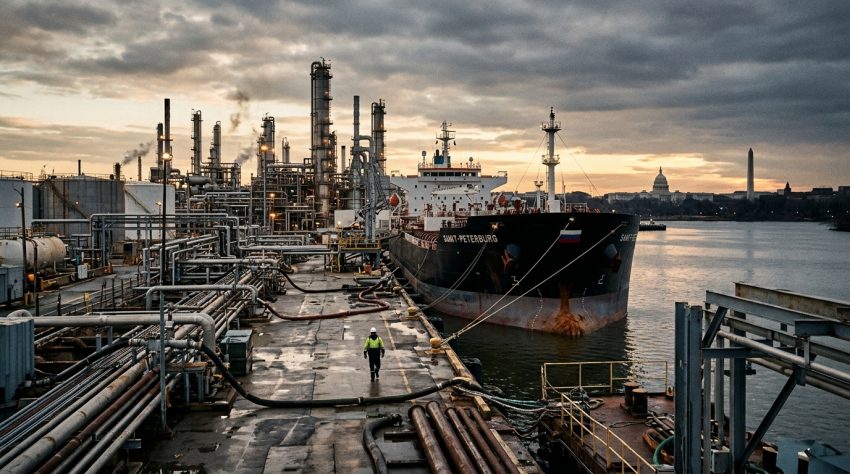
The arrival of the first Russian diesel tanker at a US port marks a significant geopolitical recalibration under the Trump administration’s second term, signalling a substantial departure from the sanctions-heavy energy posture maintained since Russia’s 2022 invasion of Ukraine. This development, negotiated directly between the current US administration and the Kremlin, represents a thaw in transatlantic energy tensions that has profound implications not only for North American fuel markets but also for global crude benchmarking and India’s downstream petroleum strategy.
While previous US administrations maintained strict prohibitions on Russian energy imports through legislative measures like the Countering America’s Adversaries Through Sanctions Act (CAATSA) and subsequent executive orders, the current administration’s willingness to permit Russian diesel shipments reflects a recalibration of energy security priorities. The Trump White House has positioned this arrangement as economically pragmatic, citing domestic fuel price stabilization and reduced dependence on Middle Eastern crude as core justifications.
Sanctions Architecture Under Pressure: What Changed?
The removal of barriers to Russian diesel imports requires understanding the mechanics of previous restrictions. Since mid-2022, the US had prohibited purchases of Russian petroleum products under the general sanctions framework, with enforcement through Treasury Department licensing and customs oversight. The Biden administration had tightened these restrictions in December 2024, capping Russian crude prices and restricting shipping insurance for Russian vessels—measures intended to constrain Moscow’s oil revenue without disrupting global supplies.
The Trump administration’s reversal does not represent a blanket lifting of all Russia-related sanctions. Instead, it appears targeted at specific energy commodities deemed non-strategic to US national security. Diesel fuel, with its critical importance to transportation, agriculture, and industrial sectors, has been repositioned as a commodity where US domestic supply constraints justify importing from Russia’s substantial production capacity. Russian refineries, particularly those in the Volga-Ural region, have consistently operated at near-maximum capacity to offset sanctions losses, producing estimated 1.2 million barrels per day of refined products despite international restrictions.
This selective sanctions relief creates legal and diplomatic complexity. European Union allies, particularly those dependent on OPEC+ cooperation for energy security, view the US move with concern. The European Commission maintains restrictions on Russian oil products, and the divergence between US and EU policy threatens to fragment the Western sanctions consensus that has underpinned energy market management since 2022.
Crude Price Dynamics and OPEC’s Diminished Leverage
The first Russian diesel shipment arrives during a period of relative crude price stability, with Brent crude hovering in the $75-85 per barrel range. However, the market fundamentals driving this equilibrium depend heavily on production discipline from OPEC+, the cartel that includes Russia as a partner nation. By expanding Russian diesel access to American refiners, the Trump administration inadvertently strengthens Russia’s position within OPEC+ negotiations and reduces the cartel’s collective leverage over global pricing.
OPEC’s effectiveness relies on production quotas that constrain supply and support prices. Russia, despite sanctions, has maintained output around 9 million barrels per day through technical innovation and the emergence of a “shadow fleet” of uninsured tankers. Access to high-value US markets for refined products—which generate greater profit margins than crude exports—incentivizes Russia to maintain production levels that undercut OPEC’s collective output discipline. This dynamic could trigger OPEC+ to reduce production quotas more aggressively, creating upward pressure on crude prices across all markets, including those serving India.
For Indian refiners and fuel importers, any OPEC+ response to expanding Russian market access carries direct cost implications. India’s petroleum import bill, currently running approximately $100 billion annually, remains vulnerable to crude price fluctuations. A 10% increase in Brent pricing would add roughly $10 billion to India’s annual energy costs, with cascading effects on fuel prices, inflation, and fiscal expenditure.
India’s Energy Security in a Fractured Sanctions Regime
India occupies a unique position in this energy reshuffling. Unlike Western nations bound by sanctions frameworks, India has maintained pragmatic commercial ties with Russia, purchasing discounted Russian crude extensively since 2022. Indian state refiners, including Indian Oil Corporation (IOCL), Bharat Petroleum Corporation Limited (BPCL), and Hindustan Petroleum Corporation Limited (HPCL), source approximately 25-30% of their crude from Russia—a relationship that has yielded substantial cost savings amid global price volatility.
The Trump administration’s decision to permit Russian diesel into the US creates several intersecting scenarios for Indian energy strategy. First, expanded Russian diesel availability to North American markets may reduce Moscow’s incentive to export additional refined products to India, potentially tightening the Asian premium on Russian diesel and increasing acquisition costs for Indian utilities and transport operators. Second, should OPEC+ respond with production cuts, Brent crude benchmarking—which Indian refiners use as a reference for crude purchases—could appreciate, offsetting the cost benefits India has derived from Russian supply relationships.
Conversely, if the US-Russia energy normalization accelerates and sanctions restrictions weaken further, India could benefit from a broader liberalization of Russian energy exports. Deeper US-Russia energy cooperation might stabilize crude markets by reducing geopolitical risk premiums embedded in oil prices, ultimately moderating costs for all importers including India.
The Indian government, through the Petroleum Ministry and Directorate General of Foreign Trade (DGFT), has historically avoided public alignment with either sanctions or anti-sanctions blocs. India’s approach has prioritized energy security through diversification and cost optimization. The current development does not appear to alter this calculus; however, Indian policymakers are likely monitoring whether US sanctions policy continues to fracture, which could provide India with additional flexibility in energy sourcing and potentially enhanced negotiating leverage with OPEC producers.
Market Implications and Downstream Pressures
The specific diesel shipment navigating toward US ports represents a commodity of particular sensitivity. Diesel demand in the United States has remained robust despite economic cycles, with freight transportation consuming approximately 40% of all refined diesel. Availability of cheaper Russian diesel could depress wholesale diesel prices in US markets, a development that benefits American transportation and logistics sectors but challenges US domestic refining margins.
US refiners, particularly those in the Gulf Coast region, have benefited from sanctions-driven protection from Russian competition. Companies like Phillips 66, Valero Energy, and Marathon Petroleum have operated in a constrained competitive environment. Expanded Russian diesel imports will pressure refinery economics, potentially triggering consolidation, reduced capacity utilization, or strategic repositioning toward higher-margin specialty products. These dynamics, while US-specific, influence global refining economics and can indirectly affect Indian refiner competitiveness in export markets.
For India’s downstream sector, which comprises major retailers like Indian Oil Corporation’s retail network, Reliance Industries’ fuel stations, and Shell India retail operations, cheaper international diesel may moderate local retail pricing pressures. However, India’s complicated fuel subsidy architecture and petroleum pricing regime—where diesel remains regulated with administered pricing mechanisms for certain consumer segments—means that wholesale price reductions do not automatically transmit to retail consumers. The Oil Coordination Committee, which oversees fuel pricing, maintains discretionary authority over retail diesel pricing and has historically moderated price reductions to preserve refiner profitability and government revenue.
Geopolitical Precedent and Long-Term Trajectory
The Trump administration’s decision to permit Russian diesel imports establishes precedent for further sanctions recalibration. While the current arrangement appears limited to specific refined products, the regulatory framework has now been demonstrated as negotiable. This development could embolden other US administrations or policymakers to revisit sanctions restrictions on other Russian energy commodities, including crude oil itself. Such an escalation would fundamentally alter global oil markets and significantly compress the geopolitical risk premium that has supported crude prices at current levels since 2022.
Russia, positioned as a sanctions-constrained but technologically resilient producer, gains from this diplomatic opening through enhanced revenue certainty and market access. The Kremlin’s energy sector, which generates approximately 40% of federal budget revenues, views expanded US market access as a validation of its capacity to navigate international isolation and a hedge against potential future sanctions intensification under subsequent administrations.
For India, the trajectory of US sanctions policy toward Russia represents an important variable in medium-term energy strategy. Should sanctions architecture continue to weaken, India’s crude import costs may moderate as global supply pressures ease. Conversely, a normalization of US-Russia energy relations could reduce the geopolitical risk premiums that have occasionally spiked crude prices during periods of heightened Ukraine-related tensions. Either scenario would benefit Indian importers relative to the high-volatility period of 2022-2024.
Conclusion
The arrival of the first Russian diesel tanker at US ports under Trump administration auspices represents a pivotal moment in post-2022 energy geopolitics. This development signals a deliberate, high-level recalibration of US sanctions policy toward Russian energy commodities, driven by domestic economic considerations rather than coalition-building or alliance management. While the immediate impact on global crude markets appears contained, the precedent established could accelerate further sanctions relaxation, fundamentally reshaping the supply-demand dynamics that have influenced global oil benchmarking since the Ukraine conflict began. For India, the trajectory of US-Russia energy normalization presents both risks and opportunities, requiring careful policy calibration to maximize benefits from potential cost moderation while hedging against renewed geopolitical volatility. The Indian petroleum sector’s ability to navigate this shifting landscape will depend on continued strategic pragmatism in sourcing and regulatory agility in pricing policy.
By FuelWings Energy Desk · Reviewed by FuelWings Editorial Team · Published 24 October 2026 IST. FuelWings covers India & global oil, gas and fuel-price news; figures are verified against the original report and public data.
Topics: Russian oil sanctions, diesel imports USA, Trump energy policy, OPEC crude prices, India fuel imports, geopolitical energy trade, US-Russia energy relations.
Source: ET EnergyWorld (Oil & Gas) ↗